
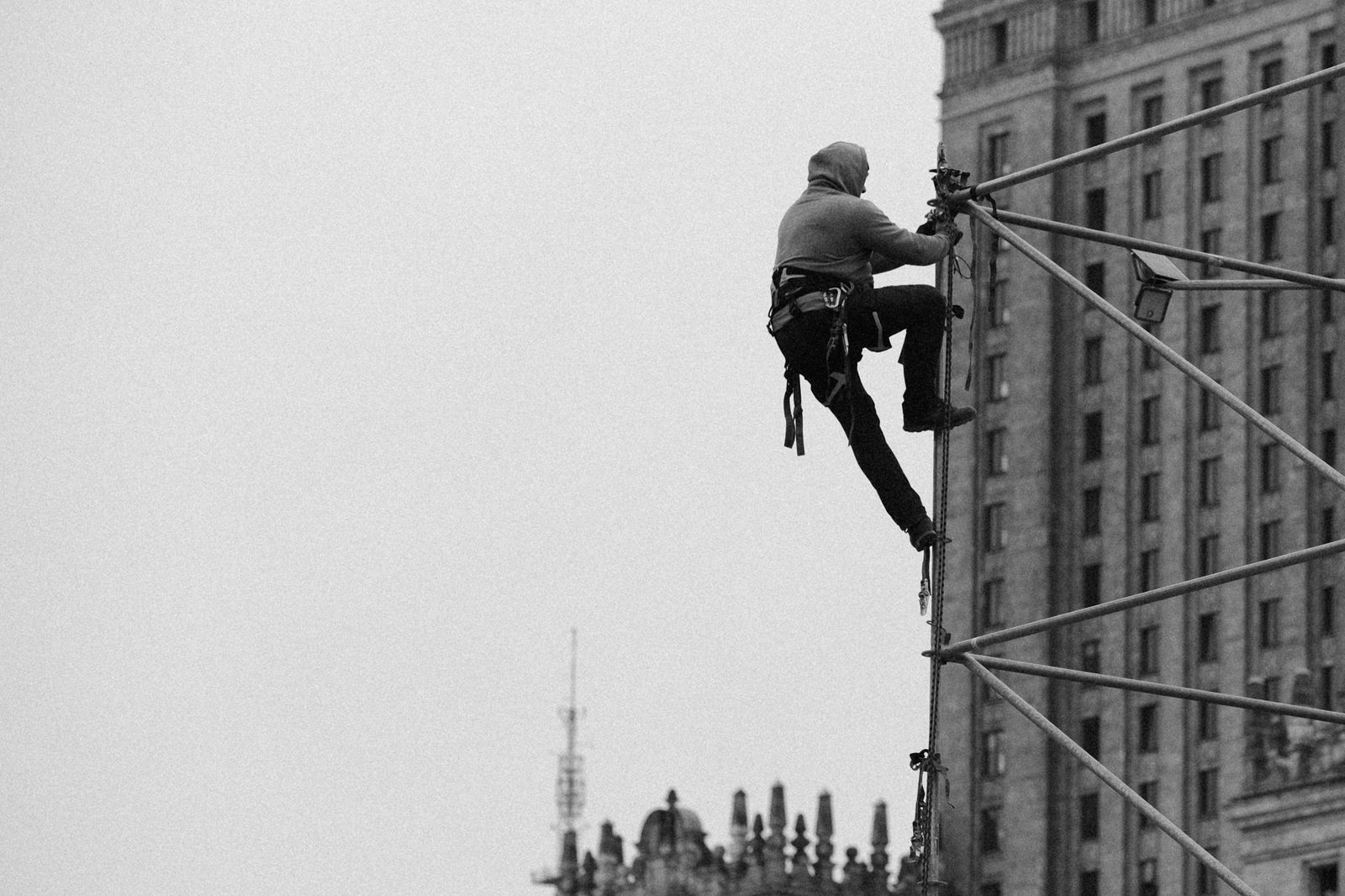
Falls from height are among the most common causes of death and serious injury on construction and maintenance sites in Malaysia. Most of these falls can be prevented with good planning, the right access equipment and trained workers.
Under the Occupational Safety and Health Act 1994, employers must provide safe systems of work, and the Department of Occupational Safety and Health (DOSH) publishes guidance on working at height. These seven rules turn that duty into daily practice.
1. Avoid work at height where you can
The safest fall is the one that cannot happen. Ask whether the job can be done from the ground, for example by assembling parts at ground level and lifting them into place, or by using extendable tools.
2. Assess the risk first
Before work starts, identify the fall hazards, the height, the surface below, the weather and any nearby openings or fragile roofs. Decide on the controls and write them into the method statement or permit.
3. Use collective protection before personal protection
Guardrails, scaffolds, mobile elevating work platforms and safety nets protect everyone in the area without relying on each person to act correctly. Choose these first. Personal fall arrest equipment, such as a full body harness, is the back-up when collective protection is not practical.
4. Use the right access equipment
Match the equipment to the task and the duration:
- Scaffolding for longer jobs or work over a large area
- Mobile elevating work platforms for short tasks with good ground access
- Ladders only for short, light work where a safer option is not reasonable
Scaffolds must be erected by trained scaffolders, inspected and tagged before use.
5. Use harnesses correctly
A harness only works if it fits, is inspected before use and is attached to a suitable anchor point. Workers should also know the clearance needed below them for the fall arrest system to work, and how they will be rescued if they fall.
6. Train and supervise
Everyone working at height should be trained for the equipment they use. Supervisors should check that controls are in place before work starts and during the job.
7. Watch the weather and the edges
Stop work at height during heavy rain, lightning or strong wind. Protect or cover floor openings, roof edges and fragile surfaces, and mark them clearly.
Quick checklist
- Can the work be done from the ground?
- Risk assessed and controls agreed
- Guardrails, scaffold or platform in place
- Harness inspected, fitted and anchored where needed
- Workers trained and supervised
- Weather and openings checked
For scaffolding that is erected, inspected and tagged by a trained crew, see our scaffolding services. Our guides on scaffold safety checks and choosing a scaffold type cover more detail. Request a quote.
Serving Kuala Lumpur, Selangor and Johor
A4 Petroleum provides scaffolding rental, erection and dismantling in Kuala Lumpur (KL), Selangor, Johor and across Malaysia. Every scaffold is erected by a trained crew, inspected and tagged before use. WhatsApp +60 12-886 6025 for a quote.